Last week, a man offered to drive me back to my car in his golf cart after an event. We did what people do when they have a few minutes together and nowhere particularly important to be: we started talking about what we do. I told him I’m a celebrant, that I marry people, and that I’ve spent much of the last fifteen years creating and leading wedding ceremonies.
He looked at me and said, almost immediately, “So you’re a priestess?”
It stopped me. Not because I think of myself as a priestess. I don’t. And not because I had described anything particularly mystical. I hadn’t. What caught my attention was that priestess was the category he reached for.
Someone close to me once used the same word while trying to describe my role in another part of my work, facilitating carefully prepared ceremonial experiences through the Inner Grove Collective. Years ago, after attending a wedding ceremony here at Promise Ridge, a mother approached me afterward and asked whether I ever led “shamanistic ceremonies.” Something about what she had just experienced made her think that I might, and she wanted to be part of one.
I am not a shaman, and I don’t call myself a priestess. I am Cherokee, and ceremony, ancestry and an understanding of our relationship to the world around us are not foreign concepts to me. But I am also careful about claiming particular titles or forms of spiritual authority. There is a difference between recognizing the ceremonial dimensions of who we are and appointing ourselves to roles we have not been given.
What interests me is that people keep looking for these words at all.
Perhaps the more interesting question isn’t what I should call myself. It is: what are they recognizing?
What do we call someone who holds ceremony?
For a very long time, this question had fairly obvious answers: a priest, a rabbi, a minister, an imam. Ceremony and religion were so closely associated that the person authorized to conduct one was generally authorized by a religious institution. Even the language of weddings reflects this. An officiant is, quite literally, the person who officiates. The title tells us what the person is permitted to do.
But permission and presence are not quite the same thing.
Increasingly, the people standing in front of me getting married don’t necessarily want a religious wedding. Many don’t belong to a religious institution at all. Pew Research Center’s 2023–24 Religious Landscape Study found that 29 percent of American adults are religiously unaffiliated, the group often called the religious “nones.” That includes people who identify as atheist or agnostic as well as those who describe their religion as “nothing in particular.” Among Americans born in the 1980s, the number is even higher: 37 percent are now religiously unaffiliated, compared with 26 percent of that same generation when Pew surveyed them in 2007.
That particular generation catches my attention because people born in the 1980s are now very much among the people whose weddings I am being invited to hold.
And religiously unaffiliated is not synonymous with spiritually indifferent. Pew found that 37 percent of religious “nones” describe themselves as spiritual but not religious. More than half, 54 percent, believe in God or a universal spirit.
That combination fascinates me. Leaving organized religion does not necessarily mean leaving behind our appetite for meaning. It doesn’t mean we stop needing ways to mark the moment when one part of life becomes another.
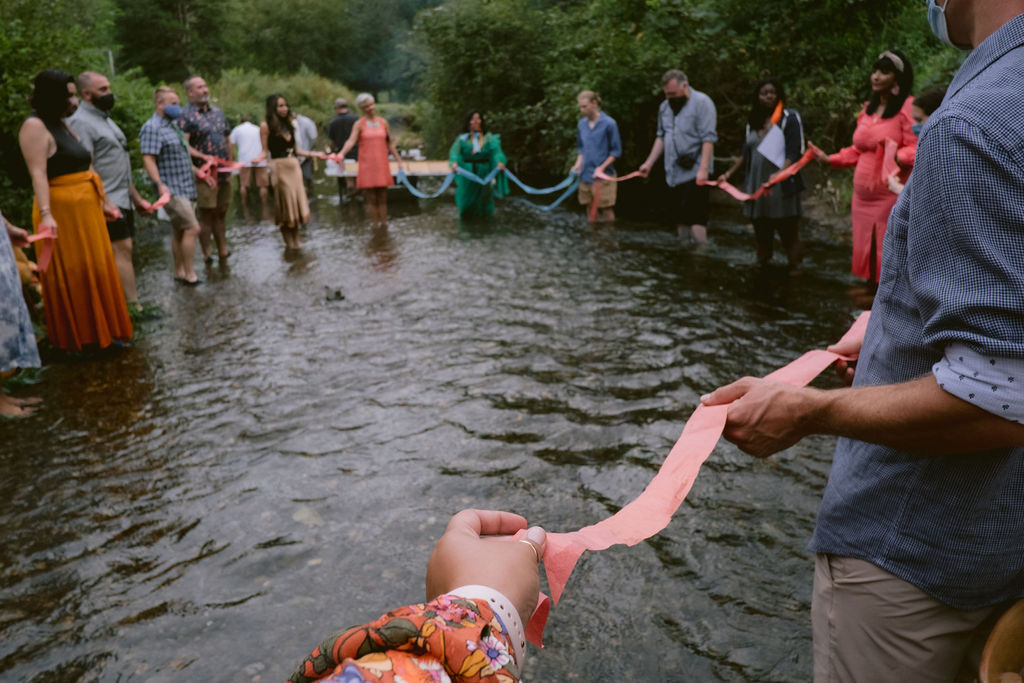
Human beings are remarkably persistent about ceremony. We marry. We bury our dead. We welcome babies. We come of age. We gather around birthdays, graduations and anniversaries. We light candles. We raise glasses. We stand when someone enters. We speak promises aloud in front of witnesses.
Even people who would never describe themselves as religious often become very particular about what should happen at the important thresholds of their lives. There seems to be something in us that understands: This happened, and therefore we should mark it.
Nor is the desire for meaningful ceremony outside organized religion particularly new. The ethical societies that became part of the modern humanist movement were creating nonreligious marriages and funerals in the nineteenth century, and by the late twentieth century demand for trained humanist celebrants had grown enough to produce dedicated training, guidance and accreditation.
Women holding ceremonial authority is much older still. In ancient Greece, women who had little civic or political authority could nevertheless occupy important religious roles. The Pythia at Delphi is perhaps the most famous example, and women also served in priestly roles associated with Athena and other deities. The forms, traditions and meanings vary enormously across cultures, of course, but the idea that a woman might stand before a community and hold ritual authority is hardly a modern invention.
What feels particularly relevant now is the large territory between traditional clergy and purely administrative ceremony. There are people who do not want church.
But they also don’t want nothing.
Where does a celebrant’s authority come from?
I keep returning to that man’s question: “So you’re a priestess?”
I don’t think he was making a careful theological assessment of me. I think he was trying to locate the authority.
A priest enters a room carrying the authority of a religious tradition. A judge carries the authority of the state. A friend who becomes ordained online to marry two people carries the authority of relationship: I know these people. They asked me to stand here.
A celebrant occupies a less familiar position.
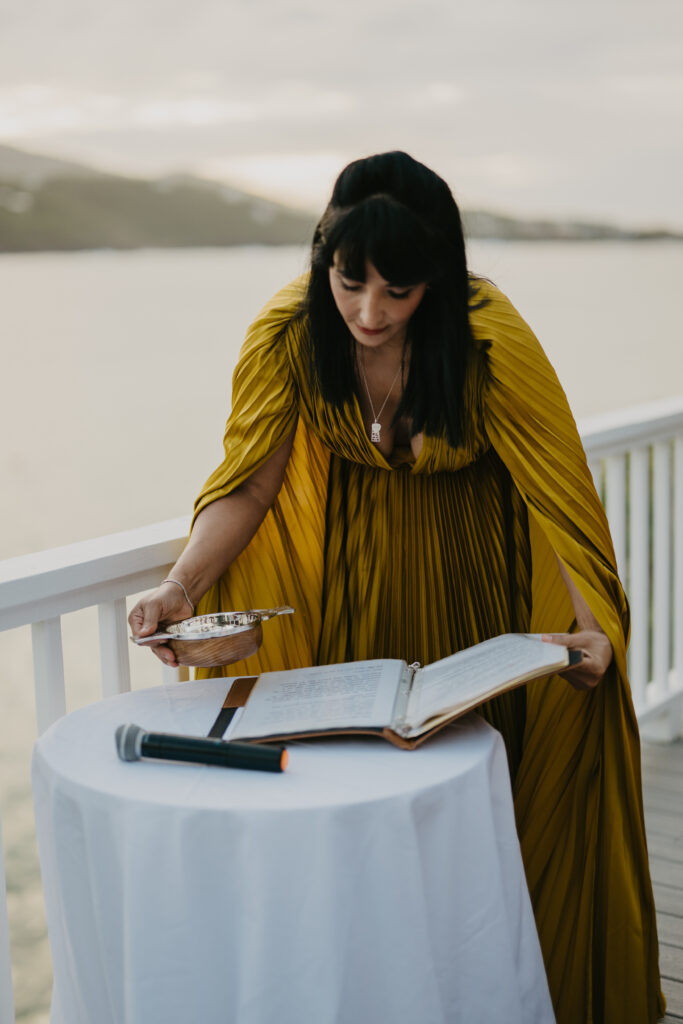
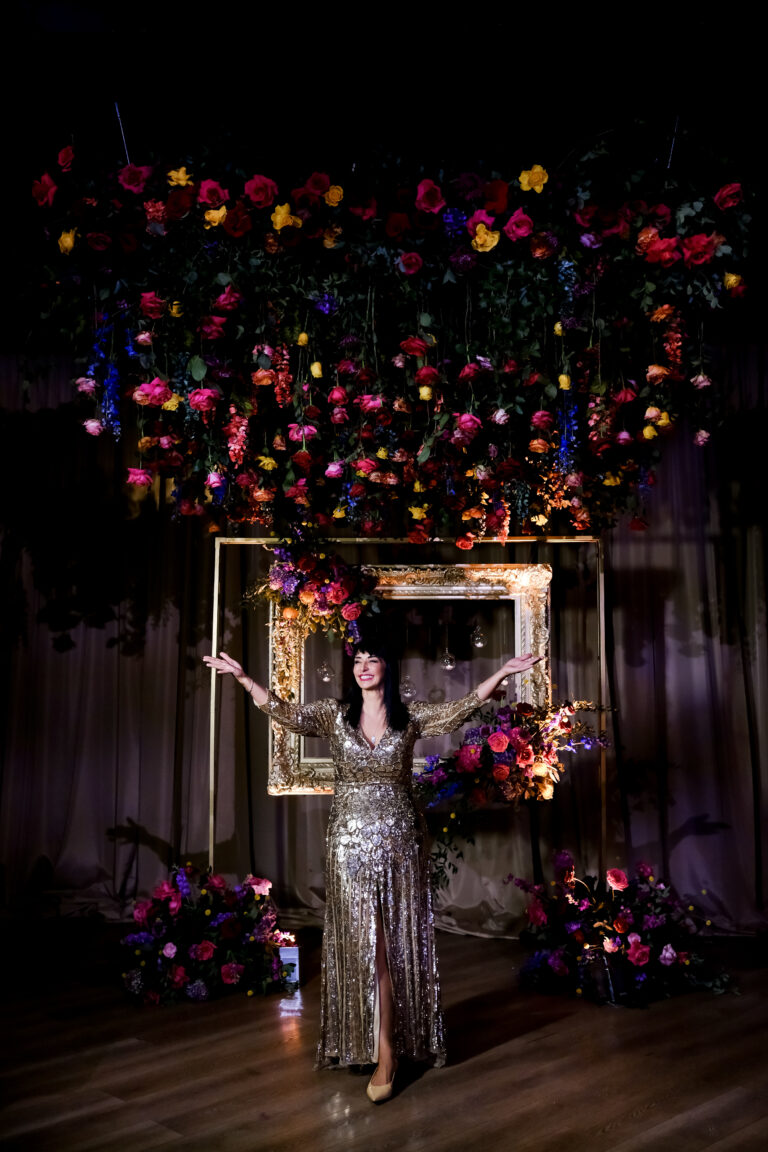
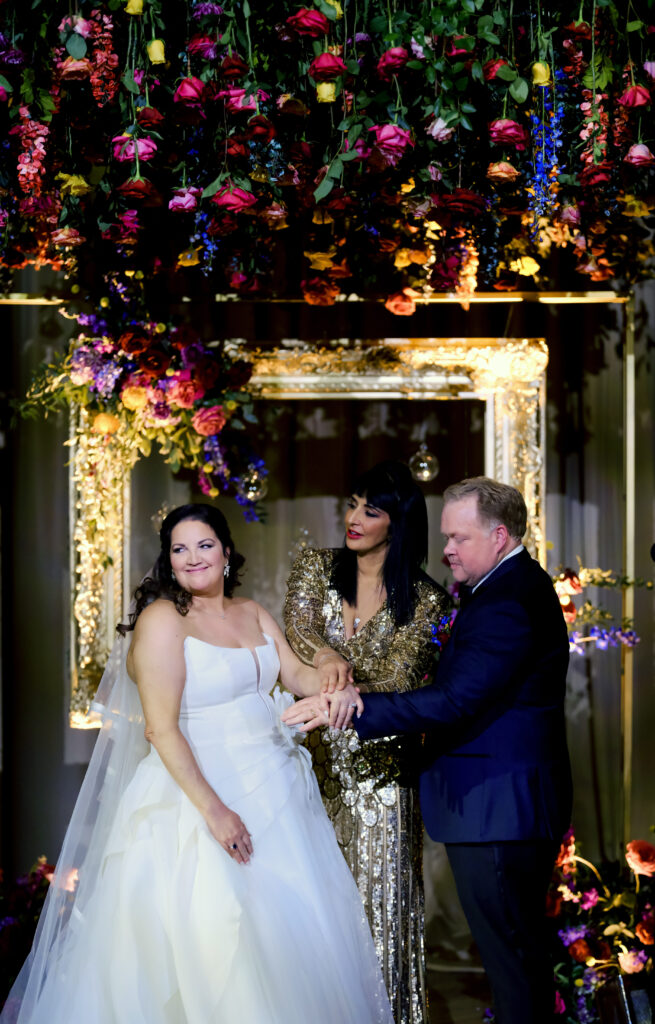
I may walk into a wedding knowing almost no one in the room except the two people standing beside me. I am quite possibly wearing sequins. And then I ask everyone to become quiet.
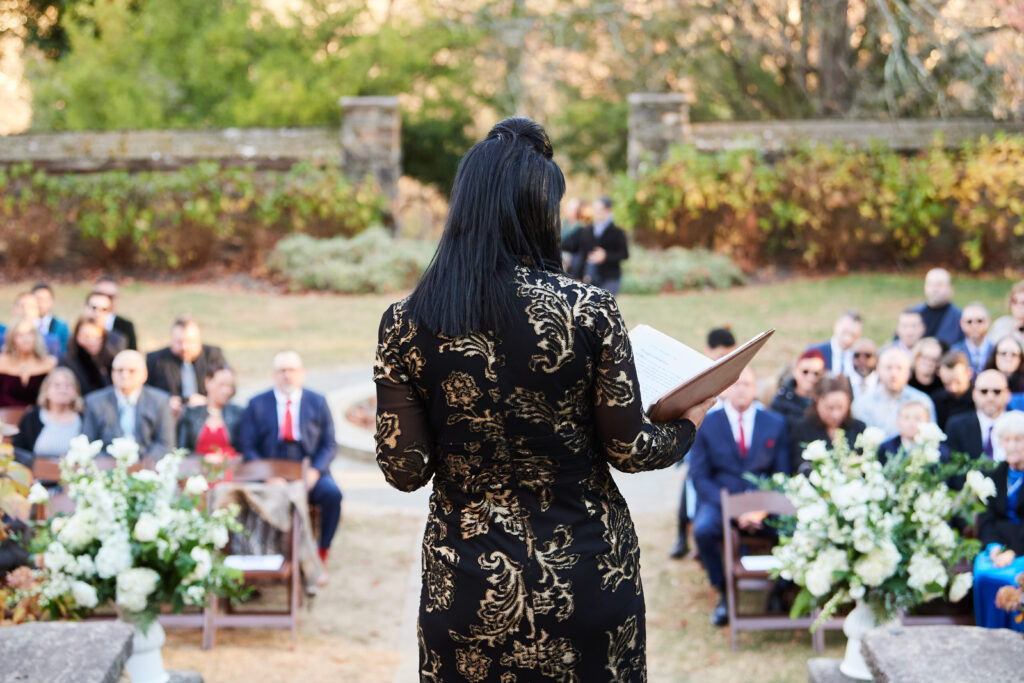
I tell a story about why these two people are here. I ask questions that require them to make promises. Sometimes I invite the people surrounding them to participate. Sometimes there is ritual. Sometimes there is silence. And, for a little while, everyone agrees to let me say, in one form or another: Pay attention. Something important is happening here.
That authority isn’t supernatural, and it isn’t something I believe a celebrant simply gets to declare. It is built through the work.
After more than a thousand ceremonies, I have come to think ceremonial authority is actually much less mysterious than it can look from the outside. You have to understand what a ceremony is doing, not only what it is saying. You have to know whose story you are carrying and remember that it doesn’t belong to you. You have to understand the difference between creating the conditions for emotion and manipulating people into feeling it.
You need to know when to speak and when the most useful thing you can do is stop speaking. You have to become comfortable with silence. You have to stand in front of a room full of people without demanding their attention and somehow still receive it.
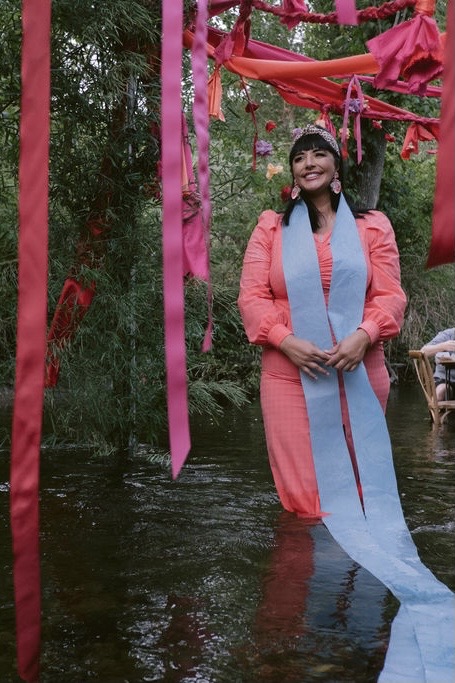
There needs to be enough confidence that the couple can relax, enough humility that you don’t become the event, enough sensitivity to notice when something has shifted in the room, and enough structure that people feel safe allowing themselves to feel something.
None of that requires magic.
Although the sequins probably aren’t hurting.
The words people choose tell us something
Priestess. Shaman. Fairy god celebrant. The blessing lady.
These aren’t interchangeable words, and some of them carry histories and meanings far beyond anything I would claim for myself. But I don’t want to dismiss them either, because they tell me something about what people are experiencing.
They aren’t simply describing the woman holding the microphone.
They are reaching into religious language, Indigenous and spiritual language, fairy tales and, in the case of the little girls, the extremely efficient taxonomy of childhood. They are trying to name some combination of ritual, presence, authority, story and meaning.
I especially love “the blessing lady.” The girls had watched someone gather people around a baby, speak words over this new little life, invite everyone into the meaning of the moment, and offer a blessing. They did not need a theology of ceremonial authority. They just named what they saw.
The couples who have called me their “fairy god celebrant” are doing something similar. There is affection and playfulness in it, but there is also recognition that my role was something more than completing the legal mechanics of their marriage. I entered their story for an important moment, helped make something happen, and then stepped back out of it.
Their words may not be technically correct. The search for a word is what interests me.
Perhaps we’re developing new language for an old human role. Or perhaps celebrant is already that word, and we’re still learning what it can mean.
Sacred doesn’t have to mean religious
I use the word sacred carefully. For some people, sacred means God. For someone else, it may mean ancestry, family, nature, commitment, community or simply something they refuse to treat casually.
A wedding can be sacred without being religious. A promise can be sacred without being made to a deity. A gathering can become ceremonial without needing to borrow an identity that doesn’t belong to it.
Maybe that is part of what people are looking for now: not less meaning, but more freedom in deciding where meaning comes from.
When couples tell me they don’t want a religious ceremony, I don’t assume they are asking me to remove the sacred from it. Often, I think they’re asking for something quite different. They want a ceremony that feels true enough to them that they can take it seriously. They want to laugh and recognize themselves. They want the people they love to understand why this marriage matters. They want the promises they make to feel consequential. They want to experience the moment when standing beside one another becomes standing beside one another as married people.
They want someone to help hold that threshold.
I’m comfortable calling that person a celebrant.
But every once in a while, someone meets me, watches the work and reaches for a much older word. Or a more magical one. Or, if they’re little girls watching a baby receive a blessing, a beautifully obvious one.
I don’t need to take any of those titles.
I’m interested in what made them go looking for one.