One of the questions couples sometimes ask me is how to make their wedding ceremony feel personal without making it too long.
It’s a reasonable concern. Nobody wants to stand in front of their family and friends listening to a comprehensive account of everything that’s happened since their first date. And yet, they want the ceremony to feel like something that could only have been written for them, shared with the people they’ve chosen to witness their marriage.
Fortunately, those aren’t the only two options.
After creating more than 1,000 wedding ceremonies, I’ve learned that a personal ceremony isn’t necessarily one that includes more information about a couple. It’s one that recognizes which details matter, understands what those details reveal, and gives them a meaningful place within the experience.
And that work begins long before I sit down to write.
Start with two people, not one love story
One of the most important parts of my process is asking both members of the couple to complete their ceremony questionnaires independently. I want to hear each person’s experience of the relationship in their own words, rather than have them work together to produce a shared account of how they met, fell in love, or decided to get married.
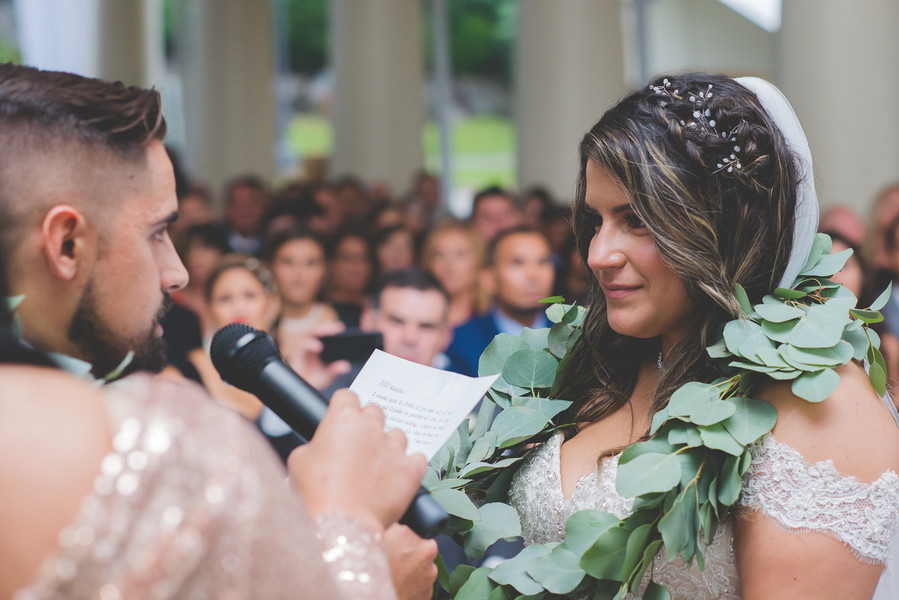
This allows me to get to know them as individuals. I begin to hear their voices in the way they write, understand their personalities, notice which details they remember, and discover what matters to each of them.
I’m particularly interested in understanding not just what their partner does for them, but why it matters so much to them.
And sometimes, their different recollections of the very same moment give me some of my favorite opportunities for humor.
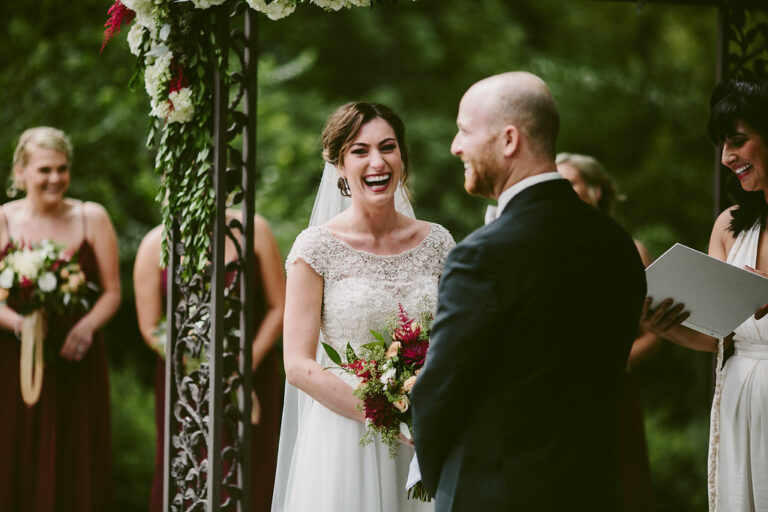
One person remembers the romance of their first date. The other remembers being terribly nervous because they couldn’t get a haircut. Neither perspective diminishes the other. Together, they give us a much more delightful picture of the two people standing before us. A wedding ceremony can be deeply meaningful without being solemn from beginning to end. Sometimes a little laughter allows everyone in the room to relax into the moment, making the tenderness that follows feel even more genuine.
Eventually, I bring those two individual perspectives together into one ceremony. But I don’t want to lose either person’s individuality in the process. The goal isn’t to create an agreed-upon account of a relationship. It’s to create something in which both people feel deeply recognized.
I teach this same independent-questionnaire approach in my Wedding Ceremony Master Class™ for Friend Officiants™. Whether you’re a professional celebrant or someone’s beloved sibling who has been asked to do the honors, getting to know both people individually is an important part of doing justice to their relationship.
Ask questions that reveal something, not just questions that collect information
Of course I want to know how a couple met. But that’s only the beginning of what I’m trying to understand.
My questionnaires are designed with the different narrative possibilities of a ceremony in mind. I’m not simply collecting a large quantity of information and hoping I’ll find something interesting to say about it later. The questions themselves are part of the creative process.
Two of my favorites are:
How do you feel loved by your partner?
What is the kindest thing your partner has ever done for you?
The first helps me understand what being loved feels like to each individual. The second often gives me a particular moment in which that love becomes visible.
I once worked with a couple whose answers to that second question were entirely different in scale and circumstance.
One described how their partner rearranged an extraordinarily difficult day to make sure they could reach a beloved family member’s bedside before it was too late. The other remembered receiving a thoughtful gift that commemorated the place where their relationship began.
One was an act of practical care during a moment of grief. The other was a tender acknowledgment of a shared beginning. Both revealed something important about the people involved, and both ultimately found their place in the ceremony.
Neither story needed to be told in its entirety for its meaning to be understood.
That’s an important distinction. Sometimes the most personal thing I can say about a relationship isn’t a story at all. It’s the understanding that comes from having heard the story.
Give every story a purpose
When I begin working with the completed questionnaires, I’m looking for more than a chronology. I’m looking for connections, recurring themes, revealing details, and opportunities to bring different parts of the ceremony together.
I think of these as narrative vehicles: ways of carrying something meaningful from the couple’s experience into the ceremony itself.
A story about how two people met might be the perfect opening. An account of their engagement might provide a natural introduction to their vows. A description of what makes someone feel loved might belong in the moment when they’re holding hands and preparing to make their commitments.
The question I ask myself isn’t simply, Is this a good story?
It’s also, What can this story do here?
For one couple, I had pages of wonderful material about an elaborate surprise proposal. There were friends recruited to help, carefully arranged distractions, a graduation celebration, a trip to a familiar park, and a gathering of loved ones waiting afterward.
I could have spent several minutes recounting the entire adventure. Instead, I condensed it into a brief passage immediately before their vows.
The important part wasn’t every step of the surprise. It was that the place where their relationship began had become the place where they decided to marry. That earlier moment of saying yes gave us a lovely way to arrive at the promises they were about to make.
A story doesn’t need to be long to accomplish something meaningful.
Let the ceremony do some of the storytelling
This is where I think couples sometimes underestimate what’s possible.
Not everything meaningful about your relationship needs to be explained in words. Some things can be expressed through the choices you make about the ceremony itself.
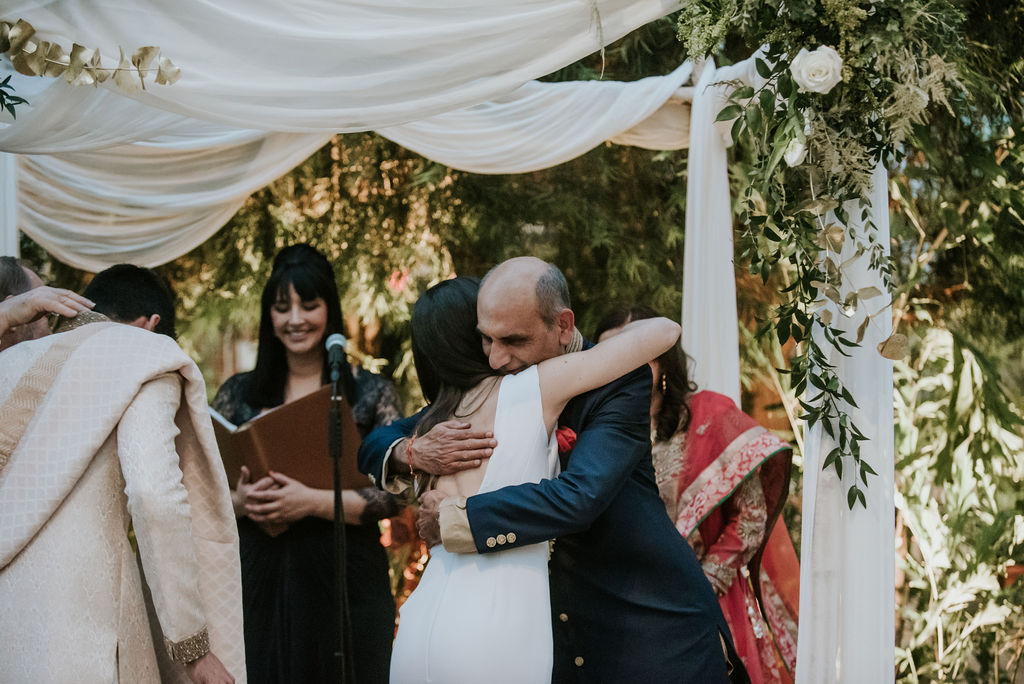
When family and community are central to a couple’s relationship, for example, there are several ways I can bring those values to life. I might invite their parents to formally welcome each new family member, incorporate a ring blessing that allows loved ones to offer their hopes and good wishes for the marriage, or invite everyone gathered to make a collective promise of support.
These aren’t simply additional wedding activities. They’re opportunities for the couple’s values to become something their loved ones can actively participate in.
Rather than spending several minutes telling everyone how important family and community are to the couple, we can allow the ceremony itself to demonstrate it.
Invite your witnesses into the ceremony from the beginning
I design my ceremonies with active participation in mind, and I want everyone gathered to understand that from the very beginning.
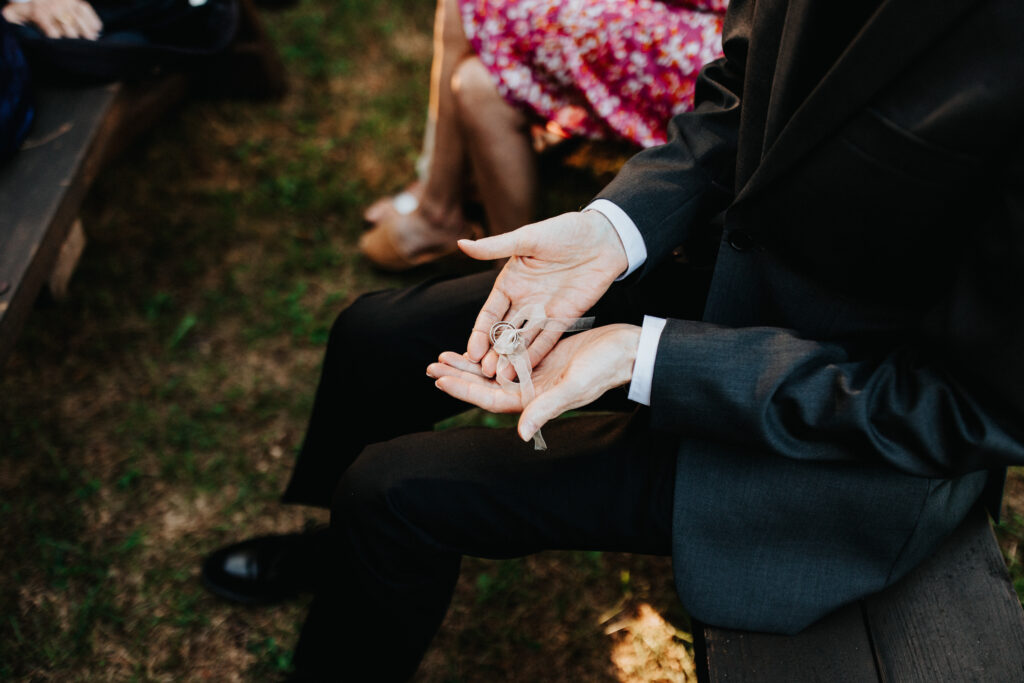
When I’m including a ring blessing, for example, I introduce it early in the ceremony, before we get into the couple’s story. I explain that the wedding rings will be passed among their loved ones, giving each person an opportunity to hold them for a moment and offer a silent wish or blessing for the marriage.
You can almost feel the room become more attentive.
Wait, the rings are coming to me? What am I supposed to do? When is that happening?
Suddenly, everyone understands that they haven’t simply been invited to watch a wedding. They’re going to be part of it.
I often explain in my welcome address that I’ve designed the ceremony to include their active participation, and I encourage everyone to put their phones away and allow the photographer and videographer to document the occasion. I want our witnesses to be available when those moments arrive, rather than experiencing everything through a screen.
Active participation isn’t limited to the moments when someone is physically doing something, either. It’s listening, recognizing, laughing together, bearing witness, allowing yourself to be moved by what’s happening, and hopefully, crying a little, too.
There is a difference between telling people that two people love each other and allowing them to recognize the particular way those two people love each other.
I want our witnesses to discover something about the relationship they might not have known before. I want them to recognize familiar personalities in the stories being shared. And I want them to understand that their presence has a purpose.
Because the ceremony isn’t simply something that happens in front of the people you’ve invited. It’s something we’re creating with them.
Editing is part of the art
One of the less visible parts of creating a custom ceremony is deciding what not to include.
By the time I’ve read two completed questionnaires, I’ve usually been entrusted with far more material than could or should fit into a wedding ceremony. There are wonderful stories, meaningful family histories, funny observations, private experiences, and little details that help me understand the relationship.
Not all of them belong in the finished script.
Sometimes a story helps me understand a person without needing to be shared publicly. Sometimes two different anecdotes reveal the same thing, and one will serve the ceremony better than the other. Sometimes a detail is delightful but doesn’t contribute to the experience we’re creating.
And sometimes, the most meaningful thing I can do with a deeply personal account is distill it into a sentence that allows the couple to recognize its significance without asking them to relive every detail in front of their guests.
I don’t measure how personalized a ceremony is by the number of anecdotes I’ve managed to fit into it.
I want every element to feel as though it belongs. The stories, readings, rituals, vows, and moments of participation should build upon one another, creating an experience with a beginning, a middle, and an end.
That’s how a ceremony becomes more than a collection of lovely wedding elements.
So, how long should a personal wedding ceremony be?
My personal preference is to aim for a ceremony that runs about 25 minutes. Roughly the length of an episode of Friends.
I’m referring to the actual ceremony, the part where I’m speaking and interacting with the couple and their witnesses, rather than the time needed for everyone to process down the aisle or make their way back out afterward.
There are practical reasons for this. Most wedding venues budget approximately half an hour for the ceremony, so a 25-minute experience generally fits comfortably within the timeline.
But there’s also something important about considering the guest experience.
I find that a ceremony lasting between 20 and 30 minutes occupies a particularly lovely space. It’s long enough to communicate that what everyone has gathered to witness is a significant rite of passage, deserving of their attention and presence. But it’s also contained enough that guests can give themselves fully to the experience without beginning to wonder what time it is, whether they should check their phones, or what comes next on the wedding-day schedule.
Of course, ceremonies that incorporate multiple cultural or religious traditions may need more time. The goal isn’t to impose an arbitrary limit on something meaningful.
It’s to be thoughtful about the experience we’re creating, both for the people getting married and for everyone who has come to witness their promises.
And after more than 1,000 ceremonies, I’ve found that 25 minutes gives us a wonderful amount of room to tell a story, share some laughter, invite meaningful participation, and make promises that deserve to be remembered.
One last thought
I often think that the greatest compliment I can receive after a wedding ceremony is when someone tells me it felt as though I’d known the couple for years.
What they’re responding to isn’t how much information I’ve shared. It’s the experience of recognizing two people they love in the ceremony we’ve created.
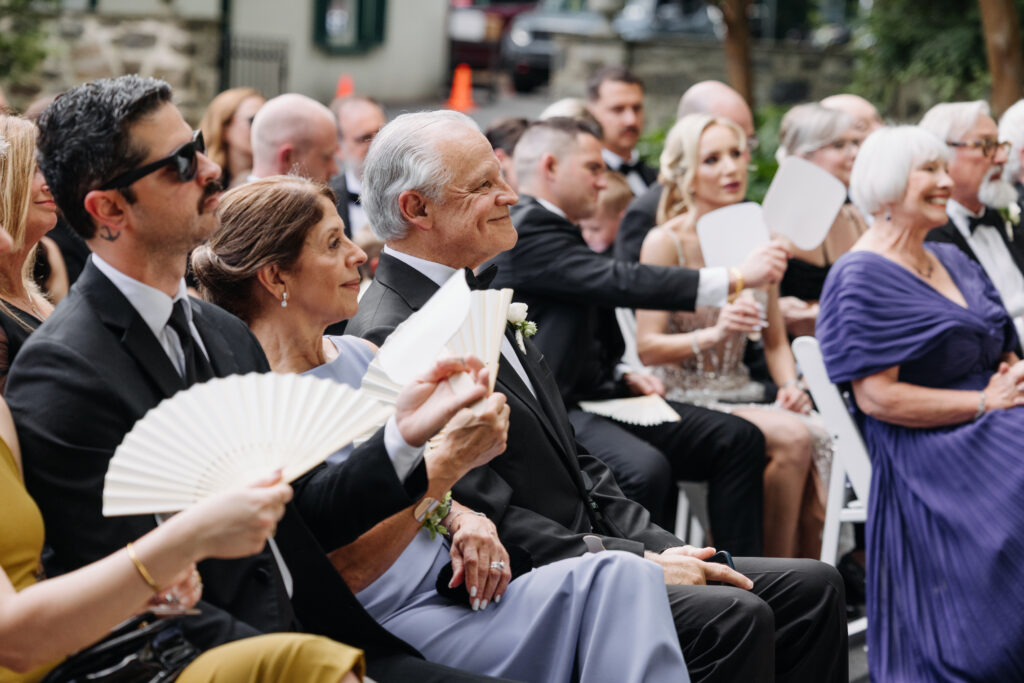
They’ve heard familiar stories told in a new way. They’ve learned something about the person their friend or family member has chosen. They’ve laughed, perhaps cried, and witnessed promises that feel connected to the actual lives of the people making them.
And afterward, they’re talking about the ceremony at cocktail hour.
Which, after more than 1,000 ceremonies, is still one of my favorite things.
For couples who believe the ceremony matters.
[Explore Custom Wedding Ceremonies]
[Explore the Wedding Ceremony Master Class™]
Frequently Asked Questions
How do you make a wedding ceremony feel more personal?
Begin by considering what makes your relationship distinctive, rather than simply recounting how you met. Meaningful memories, individual perspectives, family traditions, personal vows, and thoughtfully chosen rituals can all help create a ceremony that reflects who you are.
Do both partners need to contribute to the wedding ceremony?
I strongly encourage it. Having each person share their own perspective helps ensure that both individuals feel equally represented. It’s particularly helpful when a friend or family member is officiating and knows one partner much better than the other.
How can you include humor in a wedding ceremony without making it feel like a comedy routine?
Look for humor that naturally emerges from the couple’s personalities and experiences. Two different recollections of a shared moment, an affectionate observation, or a familiar quirk can create laughter without diminishing the significance of the occasion.
How can we involve our wedding guests in the ceremony?
Depending on your preferences, you might include a ring blessing, a declaration of support, a family welcome, a reading, or another meaningful ritual. The intention is to give the people you’ve invited a genuine role in witnessing and supporting your marriage, rather than simply adding an activity.
How long should a personalized wedding ceremony be?
My preferred length is approximately 25 minutes, not including the processional and recessional. Most venues budget about 30 minutes for a wedding ceremony, and I find that keeping the experience between 20 and 30 minutes strikes a lovely balance. It’s long enough to give the occasion the significance it deserves, while allowing guests to remain fully present and engaged. Ceremonies incorporating additional cultural or religious traditions may naturally require more time.